These Signs Indicate You Need a New Roof

Highlights
-
Asphalt shingles reach their typical replacement threshold between 20 and 25 years of continuous exposure.
-
Interior water leaks, ceiling discoloration, and attic daylight point directly to compromised roof decking.
-
Missing, curling, cracked, or severely blistered shingles indicate protective granule decay across critical slopes.
-
Extensive granule buildup inside gutter troughs confirms asphalt matrix failure and loss of solar protection.
-
Roof valleys that show severe wear create severe leak vulnerability during standard precipitation events.
-
A professional inspection from a licensed roofing contractor distinguishes repairable storm impacts from full tear-offs.
What Are the Earliest Warnings of a Failing Roof?
A home’s exterior envelope signals structural deterioration long before water drips into living spaces. The most reliable early warnings involve widespread surface decay on the shingles, sagging roof decking, and unexpected utility cost spikes caused by degraded thermal barriers.
Homes featuring standard three-tab asphalt shingles often show telltale signs such as curling corners, cracked tabs, and cupping edges after 15 to 20 years. When protective mineral granules separate from asphalt backing, shingles become brittle, dry out under ultraviolet radiation, and lose their baseline waterproofing ability. Ignoring subtle attic moisture stains or exterior shingle distortion allows minor weathering to infiltrate the sub-sheathing, resulting in mold blooms, rotting trusses, and compromised ceiling drywall.
How Does Roof Age Dictate Replacement Timelines?
Roof lifespan depends on material composition, local environmental exposure, attic ventilation efficiency, and original installation quality. Asphalt shingles account for the vast majority of residential installations, with architectural shingles offering a 25- to 30-year operational life compared to traditional three-tab varieties that rarely exceed two decades. The United States Department of Energy notes that cool-roof materials and properly vented assemblies substantially extend roof system longevity while decreasing peak cooling loads. Once a roofing system crosses the 20-year threshold, hidden deterioration behind the flashing and within underlayment layers accelerates exponentially. Postponing replacement past this design life leaves structural roof decking unprotected against rot and catastrophic winter storm failures.
Which Visible Shingle Defects Signal Immediate Danger?
Immediate roof replacement becomes necessary when physical damage compromises shingle integrity across entire roof planes rather than isolated patches.
-
Curling and Cupping: Shingle tabs curl upward at the perimeter or cup in the middle as the underlying volatile oils dry out completely.
-
Widespread Cracking: Brittle, aged shingles crack during normal wind buffeting or temperature fluctuations, opening water paths to the bare felt underlayment.
-
Excessive Granule Accumulation: Piles of coarse mineral granules in gutter downspouts leave asphalt under-layers naked and fully exposed to direct sunlight.
-
Missing Shingle Tabs: Significant windstorms tear old, hardened shingles away from adhesive seals, leaving wood sheathing completely open to rain entry.
-
Bald Shingle Patches: Exposed black substrate indicates complete loss of protective aggregate, accelerating immediate water penetrations.
Why Do Attic and Ceiling Water Leaks Demand Fast Action?
Interior water stains demonstrate that every outer layer of your roofing system, from the primary shingles down through underlayment and flashing—has failed. A persistent dark ring on ceiling plaster or damp insulation inside the attic indicates active moisture intrusion that will rot rafters and framing studs. The Federal Emergency Management Agency emphasizes that wind-driven rain penetration through aging residential envelopes ranks among the primary drivers of interior property loss during major storms. Moisture trapped behind finished drywall creates hidden toxic mold colonies that degrade indoor air quality. When leaks appear across several interior rooms, applying temporary sealant cannot restore structural integrity; full-scale removal and new roof installation remain the only permanent solution.
How Do Flashing and Roof Valley Problems Compromise Protection?
Flashing and roof valleys guide high-volume water runoff away from sensitive joints, chimneys, dormers, and intersecting roof slopes.
-
Corroded Valley Metals: Rust holes and split seams in metal valleys channel concentrated torrents directly onto underlayment.
-
Cracked Chimney Flashing: Dried mastic, rusted step flashing, and deteriorating counter-flashing let runoff seep behind masonry.
-
Failing Vent Pipe Boots: Rubber collars dry rot and split over time, allowing water to track down plumbing vents into interior walls.
-
Dormer Seam Separation: Wind exposure pulls step flashing away from vertical siding junctions, soaking perimeter wall headers.
-
Gutter Apron Deterioration: Improperly positioned drip edges let roof drainage wick backward under eaves, rotting fascia boards.
When Should You Call a Roofing Contractor for an Inspection?
Property owners should schedule an on-site structural evaluation whenever roof age exceeds 20 years, widespread storm damage occurs, or the ridge line displays visible sagging. A licensed roofing contractor conducts physical inspections of roof planes, chimney caps, ventilation intake vents, and attic rafter alignments that ground-level observations miss. Professional assessments differentiate between localized wind damage suitable for spot repairs and systemic decay requiring a full tear-off and deck replacement. The Occupational Safety and Health Administration mandates strict fall protection standards for steep-slope roofs, making DIY evaluations risky for untrained homeowners. Hiring a verified roofing contractor ensures accurate documentation of decking moisture levels, proper ice-and-water barrier placement, and code-compliant installations backed by manufacturer warranties.
How Do Sagging Rooflines and Structural Rot Threaten Home Safety?
A visibly dipping or sagging roofline signals severe, advanced structural deterioration that requires immediate intervention before partial framing collapse occurs. Unlike surface shingle wear, sagging originates beneath the exterior layers, indicating that prolonged moisture intrusion has softened the underlying plywood or oriented strand board (OSB) sheathing. When persistent leaks saturate support rafters and internal trusses, load-bearing wooden members begin to warp, bow downward, and rot under the weight of wet building materials. Extreme weather, such as heavy snow accumulation or intense wind shear, places unsustainable stress on compromised framing that can no longer meet standard structural engineering tolerances. Property owners noticing an uneven ridge line, localized roof plane dips, or creaking sounds during wind events must arrange an immediate evaluation from a licensed roofing contractor to reinforce framing supports and coordinate a comprehensive structural rebuild.
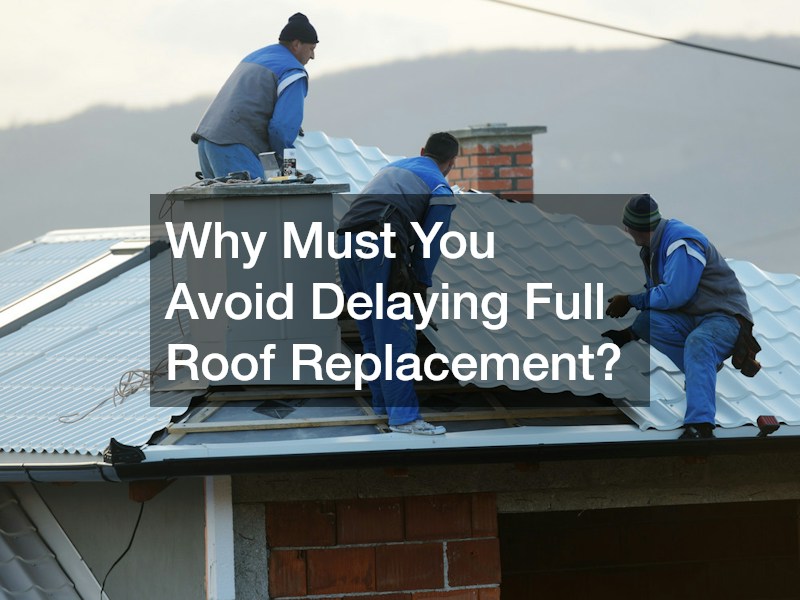
Why Must You Avoid Delaying Full Roof Replacement?
Delaying a full roof replacement turns localized water damage into catastrophic structural rot, mold contamination, and ruined interior finishes. A sound roof serves as your property’s first defense against moisture and extreme temperatures, directly safeguarding your home equity and living comfort. Addressing worn shingles, degraded valleys, and aged flashing early avoids disruptive emergency tarping and preserves structural framing for decades to come.