Patch or Replace: Deciding When a Roof Section Needs More Than a Fix

A leaking roof or a few missing shingles can trigger panic, but the real question is whether you’re looking at a quick fix or the beginning of the end for that roof section. Patching too often wastes money on a system that’s already failing, while replacing too soon means spending more than necessary. Knowing how to tell the difference can save you thousands of dollars and prevent water damage from spreading into your home. This guide walks through the key factors that separate a simple repair from a situation that calls for full replacement.
Assessing the Age of Your Roofing Material
The age of your roof plays a bigger role in the patch-versus-replace decision than most homeowners realize. Asphalt shingles typically last 20 to 25 years, while materials like metal or tile can stretch past 40 or 50 years with proper care. If your roof is approaching or past its expected lifespan, a patch is often just a temporary band-aid on a system that’s already breaking down elsewhere.
Knowing the installation date helps you set realistic expectations before you call anyone out for an estimate. A roof nearing the end of its rated life is more likely to develop new problems shortly after a repair is completed. In these cases, spending money on a patch can feel like throwing good money after bad.
- Check your home inspection report or closing documents for the roof’s installation date
- Ask a previous owner or neighbor if they remember when it was last replaced
- Compare your roof’s age against the average lifespan of its material type
- Factor in local climate, since harsh weather shortens material life faster than average
Evaluating the Size and Location of the Damage
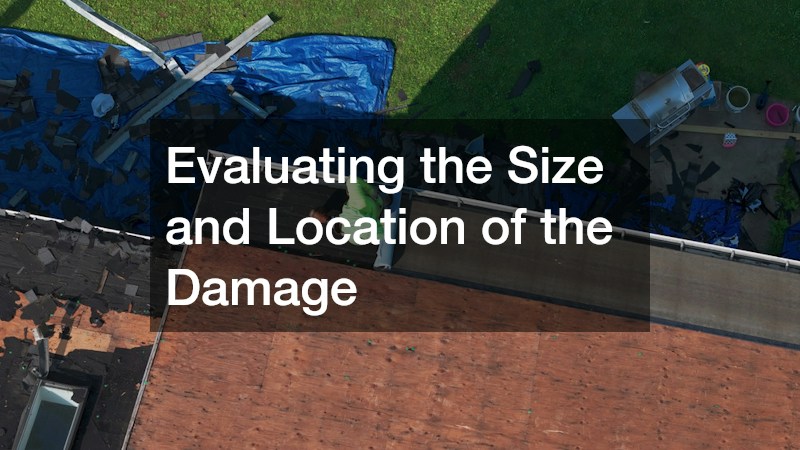
Not all roof damage is created equal, and where the problem is located matters as much as how big it looks. A small, isolated issue near a vent pipe or chimney flashing is usually a straightforward patch job. But damage that spans multiple sections, or that appears in several separate spots across the roof, often signals a more widespread failure underneath the surface.
Water doesn’t always stay where it enters, which makes location assessment tricky without a trained eye. A leak showing up in your ceiling might trace back to a different part of the roof entirely, meaning the visible damage is only part of the story. If an inspector finds moisture intrusion in the decking or insulation beneath multiple areas, that’s a strong sign the damage has moved past what a patch can solve.
- Isolated damage near flashing, vents, or skylights often responds well to repair
- Damage spread across 30 percent or more of the roof usually points toward replacement
- Sagging areas suggest structural issues that a surface patch won’t fix
- Multiple active leaks in different rooms indicate a bigger underlying problem
Counting How Many Times You’ve Already Repaired
One of the clearest signals that a section needs more than a fix is repair history. If you’ve called someone out two or three times in the past year for the same general area, that roof is telling you something. Repeated patch jobs are often a sign that the underlying materials have deteriorated to the point where repairs no longer hold.
Tracking your repair costs over time gives you a clearer financial picture than looking at any single invoice. Many homeowners don’t realize how much they’ve spent on patches until they add it all up and compare it to the cost of a new roof section. At a certain point, continuing to repair becomes more expensive than replacing, even if each individual fix seems affordable.
- Keep a simple log of repair dates, costs, and locations
- Compare your total repair spending over the last two years to a replacement estimate
- Watch for the same leak reappearing after being patched more than once
- Ask your contractor directly whether the area is a good candidate for another repair
Inspecting the Roof Deck and Underlying Structure
What’s happening beneath the shingles often matters more than what’s visible on top. If a roofing professional pulls back damaged material and finds rotted plywood, soft spots, or compromised rafters, that’s a structural issue a surface patch cannot address. Replacing just the shingles while ignoring a weakened deck sets you up for bigger problems down the road.
Structural damage tends to spread quietly, especially in attics with poor ventilation or insulation that traps moisture. A musty smell, visible mold, or daylight coming through the roof boards are all signs that the problem extends beyond the surface layer. In these situations, replacing the affected section, including the decking, is usually the safer long-term choice.
- Soft or spongy spots when walking the roof indicate deck damage
- Visible light through the attic ceiling means gaps or rot have formed
- Mold or a musty odor in the attic points to trapped moisture
- Sagging rafters or trusses require structural repair, not just a patch
Comparing Repair Costs to Full Section Replacement
Money is often the deciding factor, and it helps to look at the numbers side by side rather than guessing. A minor patch might cost a few hundred dollars, while replacing an entire section can run into the thousands depending on materials and labor. However, if your roof is old or has recurring issues, the cheaper short-term fix can end up costing more over a two or three year span.
It’s also worth considering how a partial replacement affects the rest of the roof’s appearance and performance. Mismatched materials or inconsistent aging between an old section and a newly patched one can create uneven wear patterns. For larger homes or properties with flat or low-slope sections, the considerations can resemble those used in commercial roofing projects, where decisions are driven by square footage, material consistency, and long-term maintenance planning rather than a one-time fix.
- Get at least two written estimates comparing repair versus replacement
- Ask about material and labor warranties for each option
- Factor in potential energy savings from updated insulation during replacement
- Consider resale value if you plan to sell your home within the next few years
Deciding Based on Weather Exposure and Climate Risk
Your local climate should factor heavily into whether a patch will realistically hold up. Homes in areas with frequent hailstorms, heavy snow loads, or intense UV exposure put extra stress on repaired sections, often shortening the lifespan of a patch considerably. A fix that might last a decade in a mild climate could fail within a single season somewhere with harsher weather patterns.
Thinking ahead to the next few years of weather in your region helps you avoid repeating the same repair after every major storm. If your area is prone to severe weather events, investing in a full section replacement with updated, weather-resistant materials often proves more reliable than repeated patch work. This is especially true for roofs that have already taken damage from a recent storm, since the surrounding materials may be weaker than they appear.
- Check whether your region experiences frequent hail, high winds, or heavy snow
- Ask your contractor about impact-resistant materials if storms are common
- Consider UV exposure in hot climates, which accelerates shingle breakdown
- Review your homeowner’s insurance policy for storm damage coverage before deciding
Deciding between a patch and a full replacement comes down to honestly weighing the age of your roof, the extent of the damage, your repair history, and the realistic cost over time. A small, isolated issue on a relatively young roof is usually worth repairing, while repeated problems, structural damage, or an aging system point toward replacement. Before making a final call, get a professional inspection and at least two estimates so you’re comparing real numbers rather than guesses. Taking this extra step now can save you from costly surprises and give you confidence that your roof will protect your home for years to come.